"Analitic philosophy of religion and theology after Frege and Wittgenstein"

Research Seminar of the Professorship for Philosophy at the Faculty of Theology: 

If the theology of Thomas Aquinas would be inconceivable without the philosophy of Aristotle and Neoplatonism, then that of Karl Rahner would be inconceivable without that of Kant and Heidegger. Similarly, liberation theology would not have come about without the philosophy of Marx, and process theology without that of Whitehead.

In today's philosophical landscape, analytical philosophy occupies a prominent, if not dominant, place alongside ‘continental’ philosophy, to which the above-mentioned philosophers belong. Does analytical philosophy, and in particular its two founding fathers, Gottlob Frege and Ludwig Wittgenstein, have an influence on theology?

A first attempt in this direction was made by Fergus Kerr: Theology After Wittgenstein. There is no theology after Frege yet. Certainly, however, analytical philosophy has given rise to what is known as analytical philosophy of religion, which has much in common with theology. Are there points of contact between contemporary ‘continental’ theology and ‘analytical’ theology, if such a thing exists?

The lecture series has two objectives: to examine topics in theology and philosophy of religion that are inspired by analytical philosophy, and to search for topics and problems that are common to contemporary ‘continental’ and ‘analytical’ theology.

The lectures are also designed as an academic workshop in the sense that they will attempt to identify paths for future research. The lectures will be held in German or English.

Programme:

16.09.2025, 14:15 - 16:00 Uhr, HS 12

Introduction I: Giovanni Ventimiglia (Lucerne): Is there theology without (a) philosophy?

23.09.2025, 14:15 - 16:00 Uhr, HS 12

Introduction II: Dario Affronti (Lucerne): Two relevant books: Kerr, Theology after Wittgenstein; Antognazza, Thinking with Assent: Renewing a Traditional Account of Knowledge and Belief

 30.09.2025, 14:15 - 16:00 Uhr, HS 12

Ursula Schumacher (Lucerne): History of Theology in the 20th Century

07.10.2025, 14:15 - 16:00 Uhr, HS 12

Theology after Frege I: Giovanni Ventimiglia (Lucerne): De Deo Uno (God’s names) after Frege

14.10.2025, 14:15 - 16:00 Uhr, HS 12

Theology after Frege II: David Anzalone (Lucerne): De Deo uno. Divine aseity and the challenge from Platonism

21.10.2025, 14:15 - 16:00 Uhr, HS 12

Theology after Frege III: Giovanni Ventimiglia (Lucerne): De Deo trino (God’s multiplicity) after Frege

28.10.2025, 14:15 - 16:00 Uhr, HS 12

Theology after Wittgenstein I: Ryan Mullins (Lucerne/Helsinki): History of analytic philosophy of religion in the 20th Century

04.11.2025, 14:15 - 16:00 Uhr, HS 12

Theology after Wittgenstein II: Dario Affronti (Lucerne): De fide. Faith, Doubt and Certainty: a Wittgensteinian approach

11.11.2025, 14:15 - 16:00 Uhr, HS 12  Guest speaker

Theology after Wittgenstein III: Hanne Appelqvist (Helsinki): De divinis nominibus (I) Wittgenstein on the Ineffability of God

18.11.2025, 14:15 - 16:00 Uhr, HS 12  Guest speaker

Theology after Wittgenstein IV: Simon Hewitt (Leeds): Grammatical Thomism

25.11.2025, 14:15 - 16:00 Uhr, HS 12

Theology after Wittgenstein V: Seyedali Taghavinasab (Lucerne): De divinis nominibus (II) Wittgenstein and the Non-Realist Approach to Religious Language

02.12.2025, 14:15 - 16:00 Uhr, HS 12  Guest speaker

Theology after Wittgenstein VI: Christoph Jäger (Innsbruck): " 'Opinion' sounds queer" -- Wittgenstein's lectures on religious belief

09.12.2025, 14:15 - 16:00 Uhr, HS 12

Back to Kant: Margit Wasmaier-Sailer (Lucerne): Why Reformed Epistemology Should Turn to the Idealist Philosophy of Religion

16.12.2025, 14:15 - 16:00 Uhr, HS 12

New research avenues


Who are the guest speakers?

Simon Hewitt is Associate Professor of Theology in the School of Philosophy, Religion, and the History of Science at the University of Leeds. His work lies in Christian theology and the philosophy of religion, particularly within the tradition of grammatical Thomism. He is the author of Negative Theology and Philosophical Analysis: Only the Splendour of Light (Palgrave), Church and Revolution (Sacristy), Life After Death After Marx (Cambridge University Press), and numerous peer-reviewed articles. He serves as Editor for Religious Studies – International Journal for the Philosophy of Religion – Cambridge, Treasurer of the British Society for the Philosophy of Religion, and convenor of the Leeds History of Analytic Philosophy reading group.

Hanne Appelqvist is Director of Helsinki Collegium for Advanced Studies, University of Helsinki, and Docent of Theoretical Philosophy at both the University of Helsinki and University of Turku. Her research focuses on Wittgenstein (logic, grammar), the philosophy of religion, and aesthetics, particularly exploring affinities between Wittgenstein’s philosophy and Kant’s transcendental idealism. She is the author of Wittgenstein and the Limits of Language (Routledge, 2020), Wittgenstein and Aesthetics (CUP, 2023), among other works. Since 2018, she has been Editor-in-Chief of Estetika: The European Journal of Aesthetics, and since 2021 Chair of the Nordic Wittgenstein Society.

Christoph Jäger is Professor of Christian Philosophy at the University of Innsbruck, where he holds the Guardini Chair, heads the Department of Christian Philosophy, and directs the Institutum Philosophicum Oenipontanum. His research spans social and general epistemology, philosophy of religion, meta-emotions, and free will, with special interest in epistemic authority and the normativity of belief. His recent work includes “Epistemic Authority” (in the Oxford Handbook of Social Epistemology, 2025), “Falsche Autoritäten, alongside earlier books such as The Ways Things Are: Studies in Ontology (De Gruyter, 2011). He regularly publishes articles engaging both contemporary analytic debates and historical Christian philosophical traditions

«Der demokratische Rechtsstaat – Zur Rechtskultur des Westens und der Westkirche»

Abschiedsvorlesung von Prof. Dr. Adrian Loretan

Datum: 1. Oktober 2025
Zeit: 16.00 Uhr
Ort: Jesuitenkirche Luzern

Der demokratische Rechtsstaat

Group of people marching for human rights

Der Rechtsstaat ist weltweit unter Druck. Die Rechtskultur des Westens ist ein normatives Projekt, das Menschenrechte, Rechtsstaatlichkeit, Gewaltenteilung und Demokratie umfasst. Die säkulare Vernunftphilosophie der Aufklärung hat Wurzeln im christlichen Naturrecht, wie Immanuel Kant und Max Weber betonen. Im 18. Jahrhundert liefern die natural rights (oder Menschenrechte) die Legitimation für die Revolutionen in den USA und in Frankreich. Im 20. Jahrhundert wurde aus den natural rights die Allgemeine Erklärung der Menschenrechte von 1948 entwickelt. Damit ist ein Weltethos entstanden, das säkulare und theologische Vorstellungen verbindet.

Das Buch zum Thema ist am Abend erhältlich:
Adrian Loretan, Der demokratische Rechtsstaat – eine Ideengeschichte. Zur Rechtskultur des Westens und der Westkirche, Zürich 2025.
Auch kostenfrei im Open access beim TVZ Verlag zugänglich.

Programm & Anmeldung

16.00 Uhr

Grussworte

Prof. Dr. theol. Margit Wasmaier-Sailer, Dekanin Theologische Fakultät

Prof. Dr. iur. Bernhard Rütsche, Stellvertretender Rektor der  Universität und Prorektor Universitätsentwicklung

16.20 Uhr

Abschiedsvorlesung

Prof. Dr. iur. can. et lic. theol. 
Adrian Loretan, Co-Direktor des Zentrums für Religionsverfassungsrecht

«Der demokratische Rechtsstaat. Zur Rechtskultur des Westens und der Westkirche»

Co-Referat

Prof. Dr. iur. Julia Hänni,
Richterin am Schweizerischen Bundesgericht, Lausanne

 Eine Choralschola singt unter der Leitung von Choralmagister Prof. Dr. phil. David Eben, (Universität Prag).
18.00 UhrEinladung zum Apero im Lichthof Luzern
(Anmeldung erforderlich)


Die Veranstaltung ist öffentlich und kostenlos.
Anmeldungen bitte bis am 29.09.2025 via Online-Formular.


Zur Person

Adrian Loretan, Ordinarius für Kirchenrecht und Staatskirchenrecht; Co-Direktor des Zentrums für Religionsverfassungsrecht.

Zur Rechtskultur des Westens

Die Kirche erinnert sich jeden Abend an eine Frau, die sich mit dem Unrecht nicht abfindet. Maria singt: „Er stürzt die Mächtigen vom Thron und erhöht die Niedrigen. Die Hungernden beschenkt er mit seinen Gaben.“ (Lk 1, 52-53)

„Ohne […] die Hoffnung auf das Jüngste Gericht hätte die westliche Rechtstradition nicht entstehen können.“ (Harold Berman) Im Ordensrecht entwickeln die Zisterzienser um 1115 den Begriff parliamentum. Diese kirchliche Rechtstradition prägt das englische parliament.

Rechtsstaat und Demokratie sind zerbrechlich. Um dafür einzustehen, braucht es ein Mindestwissen über deren Herkunft und eine Motivation.
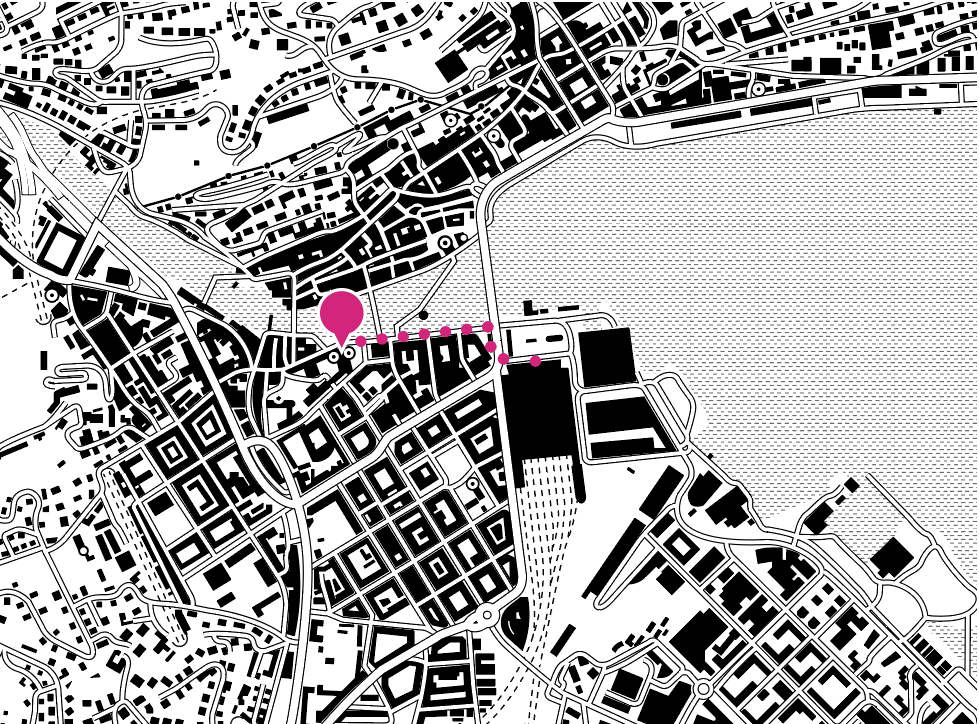
Standort: Jesuitenkirche Luzern

Jesuitenkirche Luzern, Bahnhofstrasse 11a, 6003 Luzern

Kontakt

Universität Luzern
Professur für Kirchenrecht und Staatskirchenrecht
Prof. Dr. Adrian Loretan
Frohburgstrasse 3
Postfach
6002 Luzern

T + 41 41 229 52 25
ise@unilu.ch