Smriti Sharma, PhD
CV
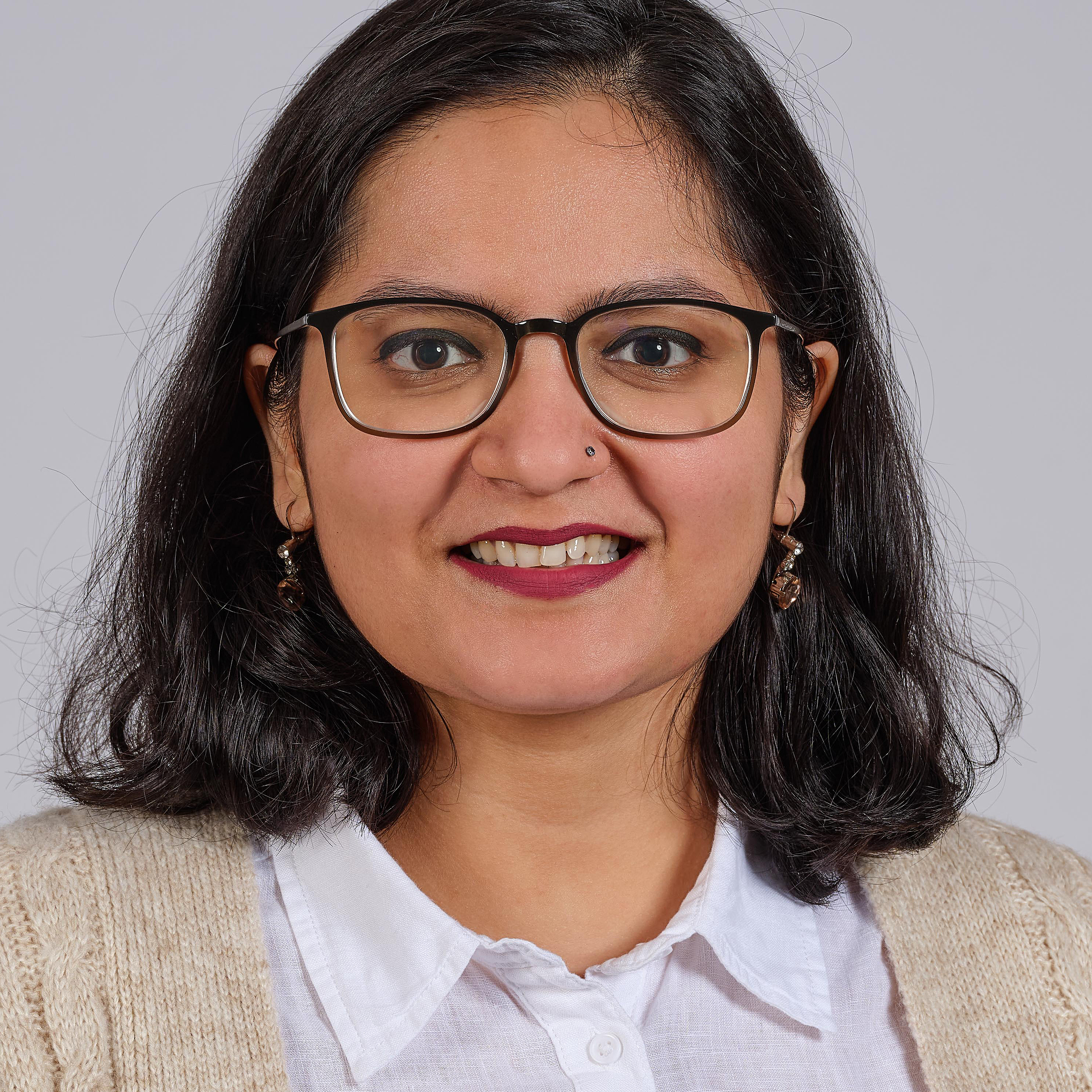
Smriti Sharma recently completed her PhD as part of the SNSF Ambizione Project [2019-2025] titled ‘Visions of the Social: The Transformation of State Planning in Post-Colonial India’ (PI: Sandra Bärnreuther) within the Department of Social and Cultural Anthropology at the University of Lucerne. During her PhD, she was also a Visiting Doctoral Researcher at the Department ‘Anthropology of Politics and Governance’, Max Planck Institute for Social Anthropology, Halle (Saale), Germany. Her research interests lie at the intersection of policy studies, science and technology studies, and health and welfare.
In her PhD titled, ‘Improving by Updating: The Making of a Publicly-Funded Health Insurance Scheme in India’, she conducted long-term ethnographic analysis of a publicly-funded health insurance program (Ayushman Bharat Yojana) for low-income citizens in India. Her research examined the program from its design to implementation and daily operation in the North Indian state of Haryana across institutions involving both public and private actors. Intervening in scholarly debates on digital governance and improvement, ‘Improving by Updating’ interrogated how policymakers continuously enact ‘improvements’ intended towards the health of (low-income) citizens by developing the analytical tool of ‘updating’. Adapting a term from the interdisciplinary field of computer science, she defines ‘updating’ as a necessary, iterative, and disruptive process that involves continuously adding design and technological features (updates) to make ‘improvements’ towards the journey to healthcare. These updates, however, exhibit significant variability, leading to (un)intended consequences for different actors, and providing critical insights into the linear idea of improvement.
She is currently working on a book project inspired by her PhD research. As part of her book project, she is actively working towards broadening the analytical tool of ‘updating’ beyond the technical relevance of evaluating a specific health insurance program. It seeks to deploy the analytical tool of ‘updating’ to investigate how political, economic, and technological visions are continuously (re)crafted and (re)inscribed within India’s healthcare regimes. In doing so, it aims to examine how shifting economic and political ideologies, as well as the technological affordances of the digital, collectively reconfigure health governance, possibly consolidate state power, and impact the provision of healthcare in India.


