A diplomatic animal gift
Pandas inspire affection. Yet their journey to West Berlin was inextricably linked to the tensions of the Cold War – and the case shows how a zoo director helped shape foreign policy.
By Britta-Marie Schenk
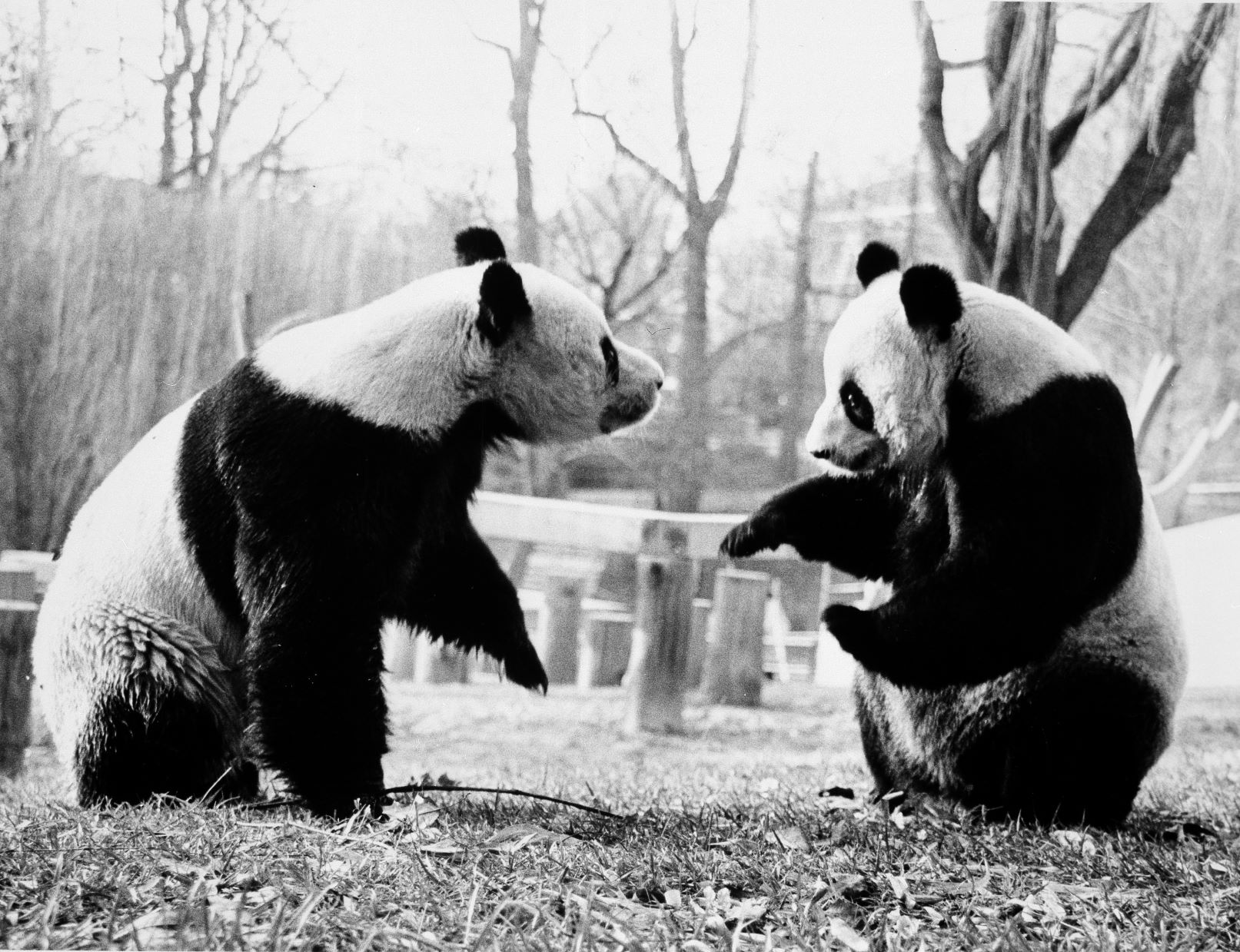
On 5 November 1980, the first pair of pandas moved into West Berlin Zoo. Amid intense media interest, Chancellor Helmut Schmidt and his wife Hannelore joined the proud zoo director Heinz-Georg Klös in welcoming the animals – a gift from the Chinese government. With this gesture, the People's Republic sought to strengthen its diplomatic and economic ties with the Federal Republic.
Beijing – Bonn – Moscow
Panda gifts could create the impression of harmonious relations while concealing considerable foreign policy tensions. In reality, relations between China and West Germany in the 1970s were more fraught than they appear in retrospect. As Beijing reoriented itself following its break with the Soviet Union, Bonn, as part of its Neue Ostpolitik, was pursuing a rapprochement with Moscow as a strategic step towards eventually overcoming the division of Germany. Beijing responded with sharp criticism of West Germany's détente policy and kept its distance. For its part, the Federal Government shied away from any diplomatic closeness that Moscow might have read as an affront.
That the pandas nevertheless arrived in West Berlin in 1980 was by no means straightforward. Setbacks, delays and competition between West German zoos all marked the process. Klös played a central role throughout, having raised the idea of a panda gift early on and taken it directly to the political level. He repeatedly approached successive Federal Chancellors and the relevant ministries – an unusual step for someone outside the diplomatic service. After his efforts under Willy Brandt came to nothing, a new opportunity arose when Helmut Schmidt took office in 1974. Klös followed the foreign policy situation closely, and when Schmidt received an invitation to Beijing he wrote immediately: "As I gathered from the press, the Deputy Foreign Minister of the People's Republic of China has invited you to visit Beijing […]." He knew that panda gifts were often tied to high-level state visits, and made his case deliberately, pointing to countries such as the USA, Japan and the UK that had already received pandas in this way.
Initiatives beyond the ministries
The Schmidt government nevertheless remained cautious. Yet alongside this restraint at federal level, a second dynamic was taking shape: regional politicians and businesses were quietly deepening their own ties with China, beneath the Soviet radar. Two parallel approaches to foreign policy emerged – a symbolically restrained line at federal level and a more pragmatic, economically driven rapprochement within the federal system.
It is all the more remarkable, then, that a zoo director should have acted as a diplomatic actor in the midst of these sensitive Cold War dynamics. Although the decision to make the gift rested with the Chinese government alone, Klös was decisive in driving the process forward. He made contact with established diplomatic players, refused to be discouraged by setbacks such as Brandt's cancelled visit to China, and brought his case to the attention of the next Federal Chancellor. He drew on his knowledge of panda gifts elsewhere, cited historical examples, stepped up correspondence with diplomats, and maintained personal contact with the Chancellor's wife, known to be an animal lover. As a non-diplomat, he set in motion a process that had previously been the preserve of diplomacy.
The case demonstrates that panda diplomacy was more than symbolic politics. It grew from the interplay between state strategies and civil society initiative. Klös's persistent commitment shows that actors outside traditional diplomacy were also capable of initiating and shaping diplomatic processes – and his determination secured one thing above all: the moment it was confirmed that the Federal Republic would receive a pair of pandas, there was never any doubt where they would live.
This article was originally published in German in the magazine Cogito.

Britta-Marie Schenk
Professor of 19th–21st Century History
unilu.ch/brittamarie-schenk


