Second Student and Alumni Conference of the Master’s in Philosophy, Theology and Religions (PhilTeR)
True or false? An important meeting took place on Friday, April 24th in Lucerne between representatives from Iran, the United States, Lebanon, Russia, Turkey, Ukraine and China. The participants in the all-day conference discussed, amongst other things, highly sensitive topics such as: faith, religion, evil, war, the holocaust, God, Islam, Judaism, and Christianity. The discussions took place in an absolutely peaceful, even cheerful atmosphere, including a shared lunch and dinner, both of which were most enjoyable. All participants were unanimous in describing the meeting as a great success. True or false?
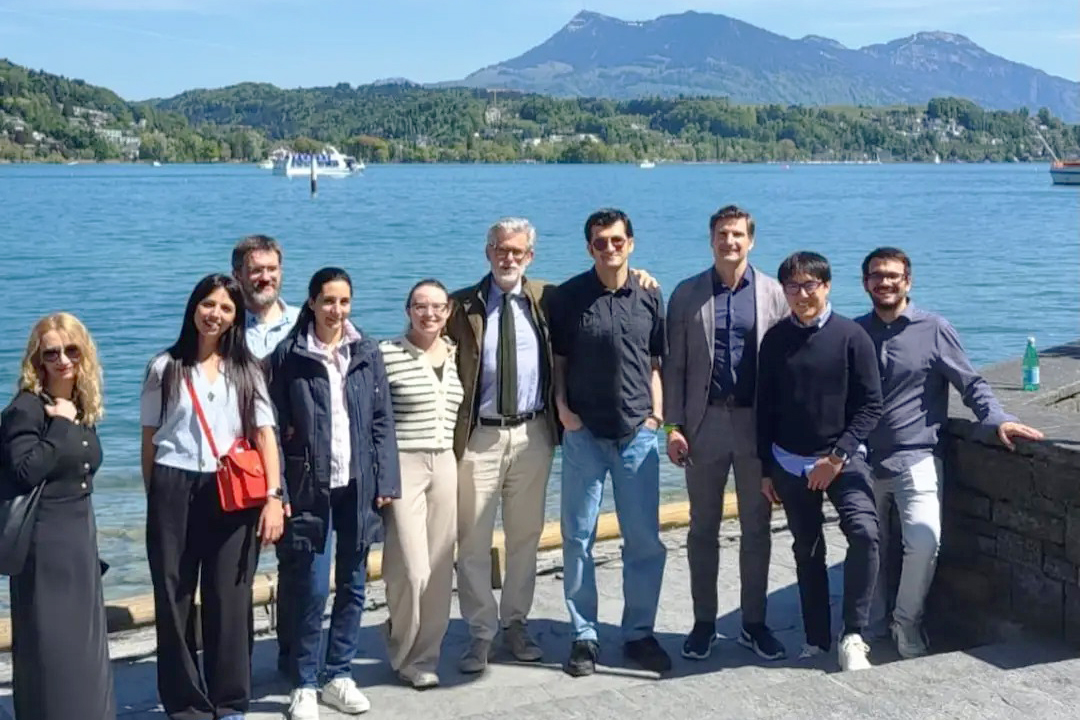
Well, despite the current international political situation, the answer, fortunately, is encouraging and positive this time: true! And the University of Lucerne, in particular the Centre for Theology and Philosophy of Religions (TheiRs) within the Faculty of Theology, organised this successful gathering. This was the 2nd Student and Alumni Conference of the Master’s in Philosophy, Theology and Religions (PhilTeR). The main protagonists of this successful international conference were the Master’s students and alumni, accompanied by the Master’s tutors (PhD like David Anzalone, main organizer of the conference, Dario Affronti, Davide Falessi, Ali Taghavinasab, the Master’ coordinator Prof. Dr. Ryan Mullins) and the Director of the Master’s programme, Prof. Dr. Giovanni Ventimiglia di Geraci. It was an in-person conference, with other students also participating online. Indeed, although the Master’s programme is delivered online – a feature that fosters genuine internationality – it has included live meetings from the outset, whether in the form of summer schools, workshops or international conferences such as this one. Among the participants at this event, in addition to those from the countries mentioned, were students and tutors from Romania, Spain, Italy, Poland, Croatia, and, online, Mozambique, Canada and the United Kingdom. Naturally, both in person and online, the Swiss were well represented.
The specific theme and title of this conference was: “What Future for Philosophy of Religion?” Indeed, in recent years, the philosophy of religion has experienced an unexpected and far-reaching renaissance within the international, and particularly English-speaking, philosophical community, with hundreds of academic publications appearing each year. The speakers at the conference in Lucerne all drew on this renaissance, each with their own approach.
What fostered peaceful dialogue among all participants, despite differences in religion and culture? The answer is simple, though not widely known today: the history of philosophy. This is the brilliant central idea underpinning the PhilTeR Master’s programme: historically, in fact, philosophy has served for several centuries as a highly effective platform for dialogue between the Abrahamic religions – Judaism, Christianity, and Islam. The greatest intellectuals of these three religions commented on, and indeed engaged in dialogue with, the great Greek philosophers, in particular Plato, Plotinus, Porphyry and, above all, Aristotle; and, in engaging with them, they engaged with one another. One of the greatest Jewish theologians of all time, Moses Maimonides, for example, explicitly drew upon the philosophies of the Greek Aristotle and the Muslim Avicenna, and Thomas Aquinas, the greatest exponent of Christian philosophy and theology, explicitly drew upon important theories from Islamic and Jewish philosophy. Starting from these fine historical examples, the PhilTeR Master’s programme aims, amongst other things, to foster dialogue between the Abrahamic religions, whilst also reviving the dialogue—which is once again a topical issue in the international philosophical community—with the great philosophers of the past.
The venture has been a success so far. Proof of this is both the success of the PhilTeR Master’s programme, one of the University’s most popular Master’s programmes and certainly the most international, and this conference. Once again, Lucerne confirms its status as a city of bridges and the University of Lucerne as a builder of important new bridges.


