ERC grant for study on counterterrorism
Postdoctoral researcher Ahmed Ajil has been awarded a EUR 1.5 million Starting Grant by the European Research Council (ERC). His five-year project seeks to address critical gaps in counterterrorism research.
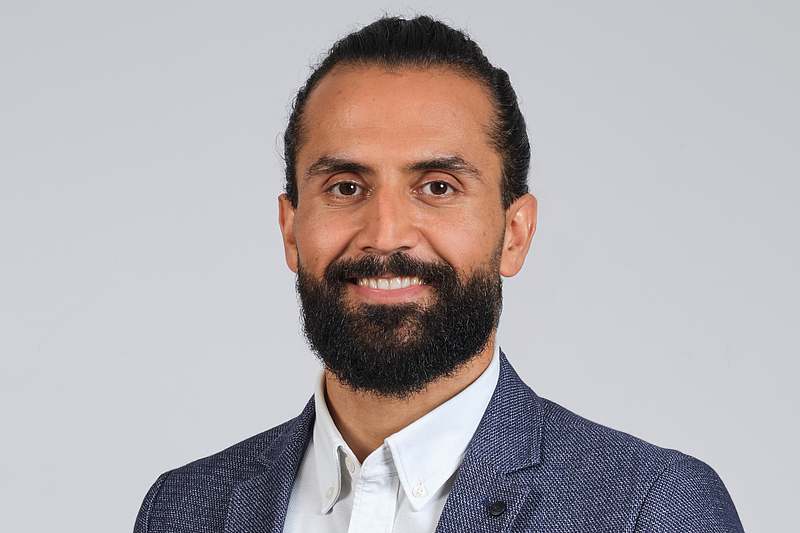
Ahmed Ajil notes that counterterrorism measures have so far been examined primarily from a security policy perspective. With his project, “Terrorism, Race and Embodied Security” (TRACES), the criminologist now aims to examine how counterterrorism is put into practice – and what effects this has on the individuals and groups directly or indirectly affected.
Focus on Central Europe
The study will focus on Switzerland, Germany and Belgium. All three countries have developed counterterrorism frameworks comparable to those of other European states, but with important contextual differences. In Germany, where authorities target both right-wing extremism and the PKK, Ajil will test the hypothesis that counterterrorism disproportionately affects people identified as Muslims. Belgium, often described as a laboratory for counterterrorism in the wake of the 2016 attacks, offers another instructive case. And Switzerland, although spared from major incidents so far, has also introduced far-reaching measures, including preventive policing powers that permit house arrest without any suspicion that a crime has been committed.
In line with poststructuralist approaches, Ajil views counterterrorism as a social phenomenon in its own right, shaped by state power, ideology and political priorities. Using documentary analysis and ethnographic methods, TRACES will examine not only how laws and practices are applied, but also how they impact the bodies, emotions and everyday lives of those directly or indirectly affected. “I hope this research will contribute to a critical examination of contemporary counterterrorism laws and policies by providing empirically grounded insights into the concrete practices carried out in the name of the ‘fight against terrorism’”, Ajil explains.
Understanding the law in practice
The project, which is expected to begin in July 2026, aims to address gaps in existing research. Previous studies have often struggled to show how laws and policies function in practice – and to reveal the power relations they reinforce or the effects they have on everyday life. Combining sociological, criminological and ethnographic approaches will provide a robust empirical basis for examining “law in action” and analysing security practices from the perspective of those affected. Ajil explains: “My aim is to gain insights that not only advance the scientific debate, but also contribute to fairer and more sustainable anti-terrorism measures in Europe and beyond.”
His project will be based at the Faculty of Behavioural Sciences and Psychology. “I see this young and dynamic faculty as the ideal environment in which to conduct such a challenging study.” According to Ajil, the researchers there are experienced in working with highly sensitive topics and vulnerable groups. “Moreover, being part of this faculty strengthens my interdisciplinary academic profile.” There is also a link to the Zug Institute for Blockchain Research (ZIBR), one of the six externally funded institutes at the University of Lucerne, which is currently still being established. At the moment, Ahmed Ajil is working as a postdoctoral researcher on a National Science Foundation project at the Department of Religious Studies, examining changes in individual and group religiosity among refugees in a cross-country comparison (previous news item (German.)
Second grant for Lucerne
ERC Starting Grants are aimed at talented early-career researchers who can demonstrate a promising scientific career and an excellent research project. This is the second ERC grant to be awarded to the University of Lucerne to date. In 2020, Mira Burri, then a lecturer and research fellow and now a full professor, succeeded in obtaining an ERC Consolidator Grant for her legal research. This grant is aimed at researchers with a higher level of experience. Researchers are supported in their applications to the ERC and other supporting institutions by the Grants Office.


