Newly appointed: A conversation with Markus Schreiber
Markus Schreiber has been an assistant professor of public law and blockchain for six months. In this interview, he reflects on his first months in the role and shares what he is currently focusing on in research and teaching.
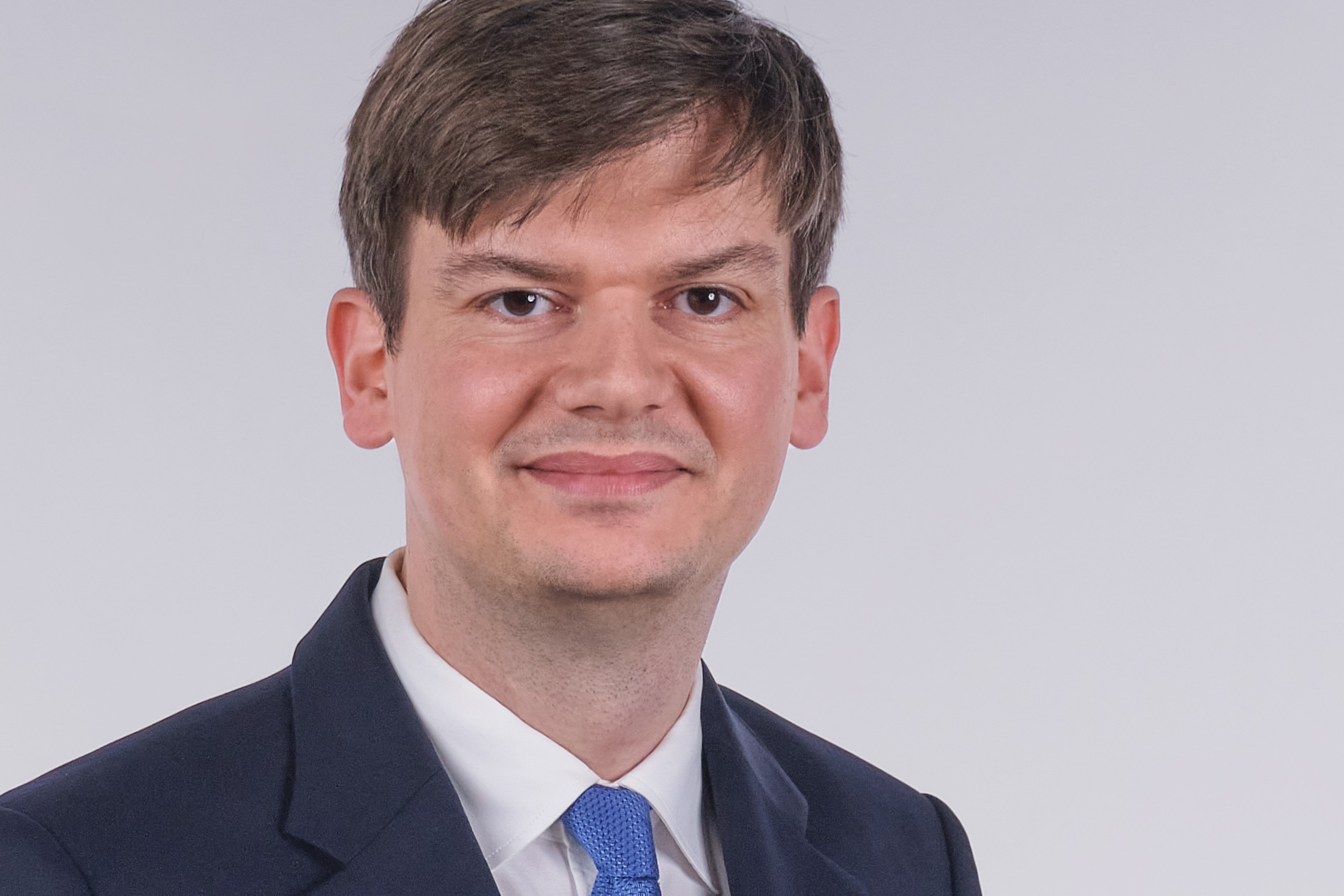
You have been working in various roles at the University of Lucerne for over ten years. How have you settled into your new role as assistant professor?
Markus Schreiber: My new colleagues at the Zug Institute for Blockchain Research (ZIBR) and I have already developed ideas for joint research. It is exciting to be part of a young, motivated team with the chance to build a completely new institute for human sciences-based blockchain research from the ground up. Of course, it also helps that I have known and valued the University of Lucerne for some time, most recently as a senior research assistant.
What has been your highlight so far?
One of my first events as an assistant professor was the graduation ceremony in the spring. One of my students, who wrote an outstanding Master’s thesis under my supervision, received the highest possible grade for her degree: summa cum laude. At moments like that, you feel very proud as a lecturer, even though I only played a small and indirect part in this achievement, of course.
Which courses are you currently teaching, what are they about, and what are your plans for the future?
In the autumn and spring semesters, I co-teach the Bachelor’s course in administrative law with other professors of public law, where I will cover the section on regulation. In my dissertation, I examined various regulatory approaches and instruments, so I am now very much looking forward to teaching this topic to students. In the spring, I will be teaching the English-language course on Climate Justice, in which we will focus on so-called "climate lawsuits." In this country, the case of the "Klimaseniorinnen Schweiz" association, which was ultimately successful before the European Court of Human Rights, is particularly well known. In the medium term, I plan to offer a master's course on blockchain technology law in collaboration with the other law chairs at ZIBR.
What are you currently researching?
We are currently completing an Innosuisse research project on hydrogen and other gases from renewable energy sources. I am leading the sub-project on regulatory issues. Our goal is to present legislators with concrete options for action. In my postdoctoral research project, I am investigating the extent to which private property may be used to exercise freedom of expression and assembly. I am focusing particularly on the digital sphere, as communication is increasingly shifting to cyberspace and the major platforms there are operated by private companies. Recently, some platform operators have been known to take a strong political stance – is there now a risk of being blocked or disadvantaged by algorithms if one holds unpopular political views?
And what does the future hold?
Over the next three years, the focus will be on establishing ZIBR. We will soon be moving into our new premises in Zug. I will be examining both the challenges posed by blockchain technology – such as the question of who is actually responsible for regulatory requirements in such decentralised networks – and the opportunities it opens up for public administration. These include innovative applications such as the digital management of land registers and commercial registers, or even the conduct of elections via a blockchain. One thing is certain: there are numerous research questions and we will not run out of them any time soon!


