Life B.Braun Lecture: Science, Public Health and Democracy
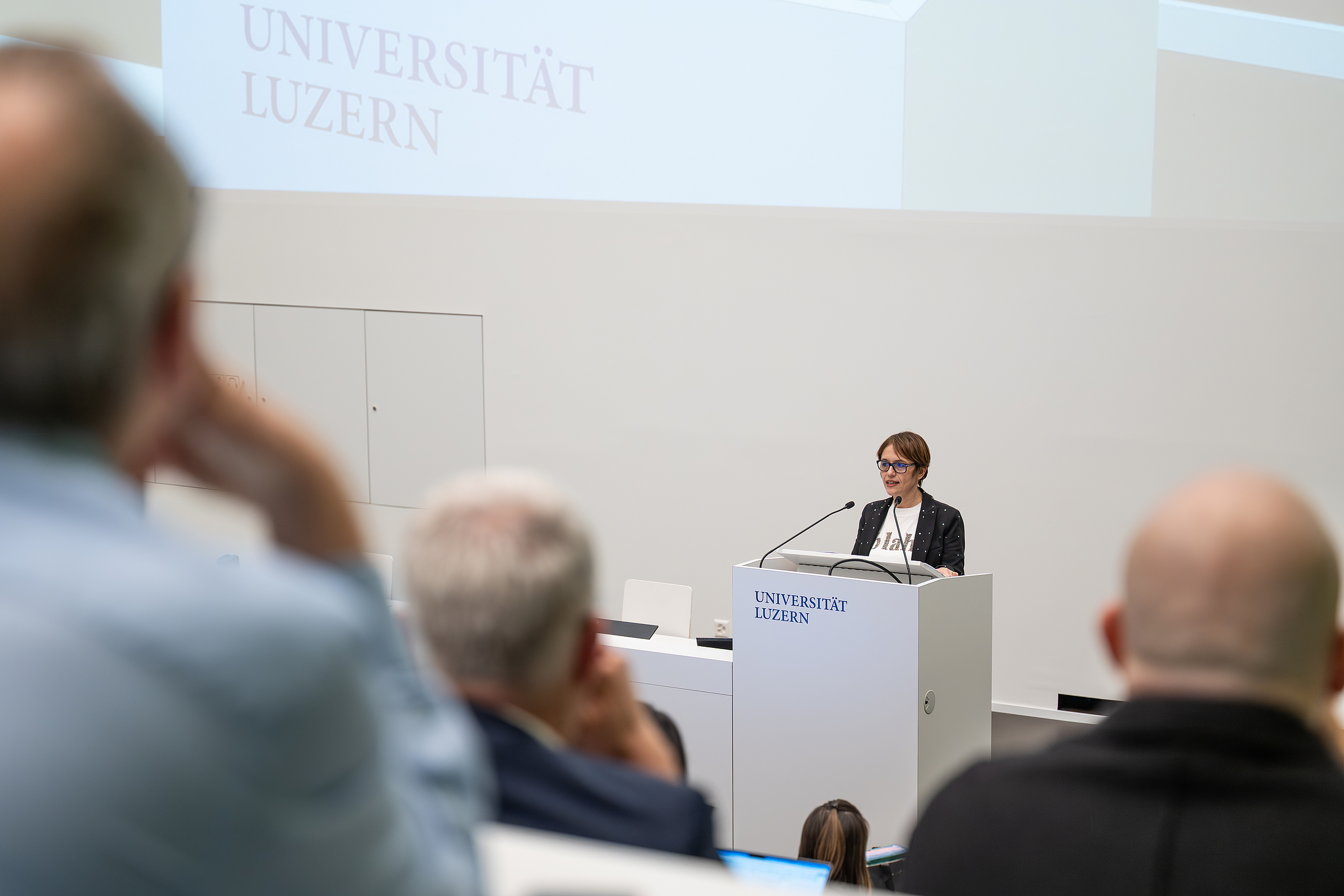
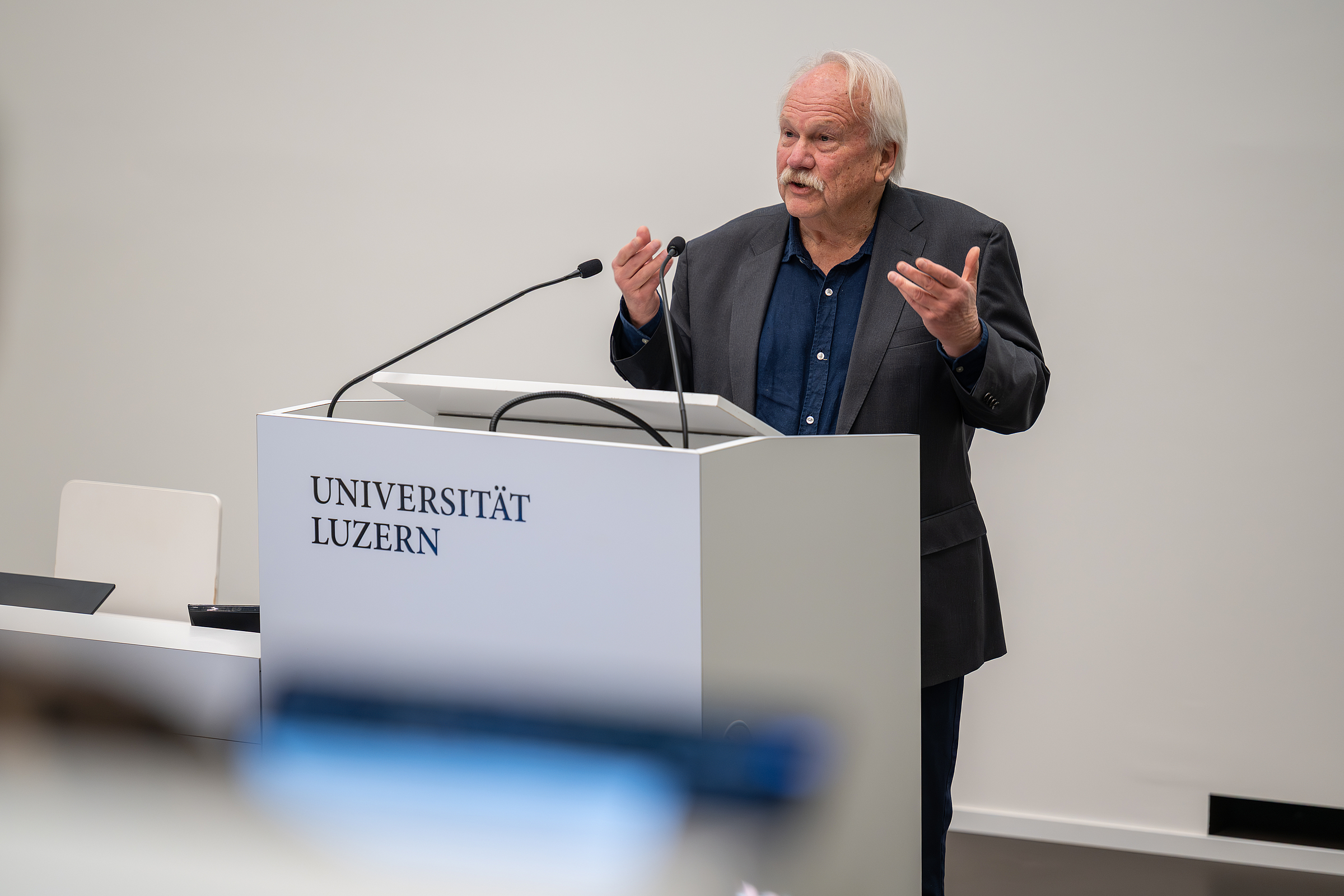
The spring edition of the LIFE B. Braun Lecture at the University of Lucerne addresses the relationship between science, public health, and democratic governance. Professor Lawrence O. Gostin discussed the challenges that evidence-based science and public health face in today’s shifting political and social landscape.

Lawrence O. Gostin, a university professor at Georgetown University, is one of the leading experts in global health law and public health policy. In his lecture, "Science, Public Health, and Democracy," he emphasized that misinformation, political polarization, and declining trust in public institutions undermine scientific integrity and democratic stability.
Science and public health under pressure
Gostin began by outlining the central argument of the lecture: science and public health are under increasing attack, with far-reaching consequences. According to Gostin, democratic institutions become more fragile when misinformation spreads unchecked, and scientific evidence is disregarded. He noted that these developments are closely linked to broader assaults on freedom of expression, academic institutions, and public trust.
The role of quality health information
A major focus of the lecture was the concept of quality health information. Gostin argued that reliable health information should be considered a fundamental determinant of health. He described how people today obtain much of their health information via social media, apps, internet searches, and AI-powered tools: an environment in which misleading content can spread faster than evidence-based guidance.
Gostin also discussed how deepfakes and other AI-generated media make it increasingly difficult to distinguish between trustworthy and false information, with particularly serious effects on younger generations. He linked these developments to not only to poor health decisions but also to broader harms affecting mental health, social cohesion, and public discourse.
The importance of science and scientific methods
Throughout the lecture, Gostin emphasized the importance of the scientific method, even when institutions make mistakes or revise guidance as evidence evolves. Science, he argued, is a disciplined method of inquiry based on evidence, transparency, and correction. These qualities, he noted, are essential to public health and democratic governance. He urged institutions, universities, and communities to actively defend these principles.
Public health, solidarity and democratic values
Gostin concluded by underscoring the need to rebuild a public culture rooted in care, decency, compassion, and solidarity. Beyond policy debates, he emphasized that public health ultimately depends on how societies value one another and whether they are willing to defend human dignity and democratic norms in times of uncertainty.



About the LIFE B. Braun Lecture
The LIFE B. Braun Lecture is part of a collaborative initiative between the University of Lucerne and B. Braun aimed at fostering dialogue on health, functioning, and wellbeing. Held twice a year, the lecture series brings together leading national and international experts to explore interdisciplinary perspectives on the lived experience of health and to strengthen exchange between research, policy, and practice.


