In Memoriam Don Gardner (1949–2025)
Don Gardner worked at the University of Lucerne from 2008, first as a senior assistant and later as a lecturer in the Department of Anthropology. After a brief illness, he passed away unexpectedly on September 5th.
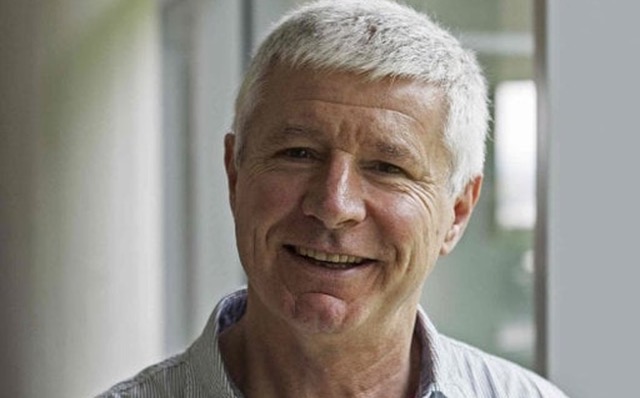
Don was a brilliant and deeply thoughtful anthropologist whose intellectual passion was inseparable from his warmth, humour, and curiosity. He had a rare gift: the ability to think with great philosophical depth while remaining open, cheerful, and fully engaged with the small, human details and everyday pleasures of life. He often reminded us that human beings are profoundly social creatures — a truth that, perhaps more than anyone, he himself embodied.
When Don first came from the Australian National University in Canberra to Heidelberg, initially as a visiting professor in 2002, he immediately connected with scholars working in Papua New Guinea, his primary regional focus. Deeply interested in both the theoretical and empirical work of others, he began teaching courses on Melanesian ethnography, social theory, religion, and ritual. He soon became a senior lecturer and decided to return to Europe (he was born in London), making it his home.
In 2008, he moved to Lucerne with his long-term partner and later wife, Bettina Beer, who had been invited to establish a new Department of Social and Cultural Anthropology at the university. From the very beginning — first as a senior lecturer and later as an external lecturer (Lehrbeauftragter) — Don played a formative role in shaping the department’s intellectual direction. He made significant contributions to the department’s major third-party funded research projects, initially by shaping their theoretical foundations and later through empirical involvement. These included, most recently, “De-Kinning and Re-Kinning? Estrangement, Divorce, Adoption and the Transformation of Kin Networks” (2022–2026), as well as “International Capital and Local Inequality: A Longitudinal Ethnography of the Wampar (Papua New Guinea) under the Impact of Two Large Projects (a Copper-Gold Mine and a Timber Biomass Energy Plant)” (2015–2018), and “Understanding Rights Practices in the World Heritage System: An In-Depth Case Study of the City of Vigan, Philippines” (2014–2016).
Don’s presence was felt most strongly in his regular and thoughtful contributions to our research colloquium — both during sessions and in the lively conversations that followed at the pub. He attended the PhD colloquium with unwavering commitment and played a vital role in mentoring all of our PhD students and postdoctoral researchers. His meticulous and incisive feedback — whether on theoretical frameworks or empirical material — enriched our manuscripts and discussions in lasting ways. Just as much, we will miss the warmth, humour, and camaraderie we shared with him. His intellectual clarity and generous social spirit will remain with us.


