![[Translate to English:]](/fileadmin/_processed_/9/1/csm_LIFE_winter_01bb29d1f8.jpg)
LIFE Winter School on Health and Well-being
Strengthening health and well-being for human flourishing!
Well-being is a fundamental human aspiration. But what does it really mean in the context of health? How can we foster it through health systems, care models, communication, and policies that empower people to thrive?
The LIFE Winter School on Health and Well-being is a three-day interdisciplinary program in health sciences, designed for PhD students and early-career researchers. The school offers a rich, cross-disciplinary foundation to rethink how we understand, measure, and act upon health and well-being.
This school is not about treating diseases. Nor is it about well-being in a general or abstract sense. It is about how the health sector can foster human flourishing by addressing functioning at personal and systemic levels. Participants will explore well-being as a concept, but always in connection with its relevance for health, healthcare, and health systems.
- A historical, philosophical, and economic understanding of well-being as it relates to health.
- How functioning acts as the link between health and well-being.
- How to capture the lived experience of health using qualitative and quantitative methods.
- How to understand and reshape health systems, services, and policies through a functioning lens.
- How to integrate narrative, cultural, and ethical dimensions of health into research and practice.
- Develop your own research vision on functioning-based health and well-being tailored to your research work.
PhD students, researchers and practitioners in health sciences, rehabilitation, health policy, economics, social sciences, public health, psychology and other related fields who want to engage with cutting-edge research and innovation around well-being and functioning in health.
The LIFE Winter School is a response to a growing need in health research and practice: to go beyond fragmented, disease-centered approaches and toward an integrated understanding of what it truly means to live well. Rooted in the field of health but drawing on insights from philosophy, economics, communication, humanities, and behavioral science, this school offers a one-of-a-kind educational experience.
What makes the LIFE Winter School unique is its focus on functioning, a concept that bridges health and well-being by capturing the lived experience of health. While traditional public health models often emphasize population-level outcomes or disease prevention, this school centers on the capacity of individuals and communities to live meaningful, autonomous lives in their environments. This perspective is especially relevant in the face of demographic shifts and aging populations, where maintaining functional ability is key to ensuring quality of life and societal inclusion.
Participants will also explore innovative methodologies for capturing lived experience, discover how to design policies and services that enable human flourishing and learn to navigate health and well-being from a multidisciplinary perspective.
The faculty reflects this interdisciplinary richness, bringing together world-class experts. The structure of the program fosters deep learning, peer exchange, and personalized mentorship, which are all essential for developing a transformative research vision.
This is a school for those who want to shape the future of health by advancing science and rethinking what health systems should aim for in the 21st century.
Download the detailed program here
Day 1 (February 23): Conceptual foundations
12:30 – 13:00 Welcome and registration
13:00 – 14:30 Introduction and Opening Lecture: ‘Well-being across time: From ancient philosophy to modern economics’. Lecturer: Sara Rubinelli
14:30 – 16:00 Lecture: 'What is functioning and why does it matter for health? – Rethinking Health and rehabilitation”. Lecturers: Jerome Bickenbach and Gerold Stucki
16:00-16:30 Coffee break
16:30–17:45 Developing a research abstract. Lecturer: Céline Bolliger
18:30–21:00 Networking dinner
Day 2 (February 24): Methods
9:00-10:30 Workshop: 'Quantitative methods to capture the lived experience of health’. Lecturer: Adrián Martínez de la Torre
10:30 - 11:00 Coffee break
11:00 – 12:30 Workshop: 'Qualitative methods to capture the lived experience of health’. Lecturer: Nicola Diviani
12:30 – 13:30 Lunch
13:30 – 15:00 Workshop: “What supports functioning? Rethinking policy”. Lecturer: David Weisstanner
15:00 – 15:30 Coffee break
15:30 – 17:00 Workshop: “What supports functioning? Rethinking investment”. Lecturer: Diana Pacheco Barzallo
17:00 – 18:00 Developing a research abstract (continued)
Day 3 (February 25): From Research to Impact
8:30 – 10:00 Final Workshop: Abstract presentation. Facilitators: Sara Rubinelli and Cristina Mesa Vieira
10:15 – 10:30 Coffee break
10:30 – 12:00 Speaking science: translating research for policy and practice. Lecturer: Maddalena Fiordelli
12:00 – 13:00 LIFE B.Braun Keynote Lecture
13:00 – 14:30 Lunch
14:30 – 15:30 Technology at the service of health and wellbeing. Lecturer: Viktor von Wyl
15:30 – 17:00 Building advocacy networks and institutional engagement. Lecturer: Matilde Leonardi
17:00 – 17:15 Closing. Facilitators: Sara Rubinelli and Cristina Mesa Vieira
This course awards ECTS credits based on participation and study effort. Participants receive 1 ECTS credit (equivalent to 25–30 hours of work) if they:
- attend all sessions, and
- actively take part in workshops and discussions
Participants can earn 2 ECTS credits if they meet the above requirements and complete a written paper after the course.
To ensure participants gain the fullest benefit from the LIFE Winter School, we particularly welcome applicants who:
hold a Master’s degree or have equivalent experience in health sciences, medicine, public health, economics, health policy, social policy, or related fields
have a good command of English to actively engage in lectures, discussions, and group activities
are currently involved in research or practical work relevant to the course topics.
All participants should pay an administrative fee of CHF 50.
Scholarships
We offer a limited number of grants to help cover your travel and accommodation expenses during your stay in Lucerne. To apply for these scholarships, please submit the following documents to life@unilu.ch, along with the registration form and CV:
Brief letter of motivation explaining your interest in the course
Proof of current enrollment or employment in a relevant field
Grants are provided as reimbursements (not upfront payments) for actual expenses, covering public transportation and accommodation up to CHF 800 for participants coming from Europe and CHF 2000 for participants from outside of Europe.
Due to University regulations, only single-room accommodation will be reimbursed. Air travel will be reimbursed when total transfer and travel time exceeds 7 hours, and only economy fares are eligible in those cases. Private car travel is not eligible for reimbursement.
All cases will be considered on an individual basis.
Register and apply for a scholarship by 30 November 2026 to be considered for financial support.
Since scholarships are limited, awards will be made following a careful review of the motivation letter and CV.
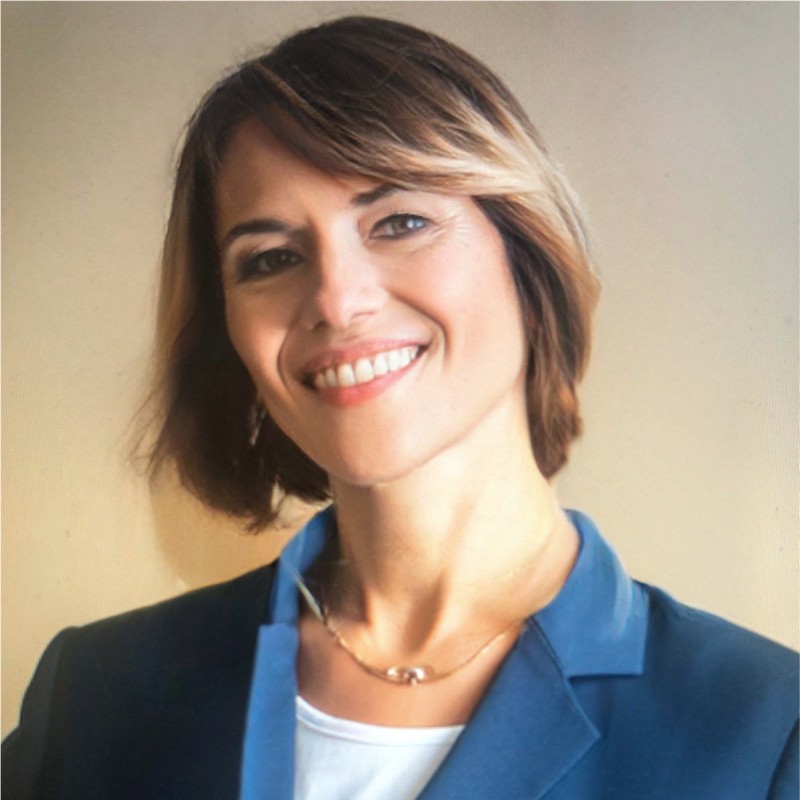

Prof. Sara Rubinelli, PhD
Professor of Health Sciences with a focus in Health Communication
Vice-rector Faculty for Health Sciences and Medicine
Prof. Gerold Stucki, MD
Professor of Health Sciences and Health Policy
Lead Strategic Council Swiss Learning Health System
Co-Director Center for Rehabilitation in Global Health Systems
Registration
The registration for the LIFE Winter School 2027 is open until November 30, 2026. Please note that participation is limited to a maximum of 25 participants.
Register now below!


