![[Translate to English:]](/fileadmin/_processed_/9/1/csm_LIFE_winter_01bb29d1f8.jpg)
LIFE Winter School on Health and Well-being
Well-being is a fundamental human aspiration—but what does it really mean in the context of health? And how can we foster it through health systems, care models, communication, and policies that empower people to thrive?
The LIFE Winter School on Health and Well-being is a three-day interdisciplinary program in health sciences, designed for PhD students and early-career researchers. The school offers a rich, cross-disciplinary foundation to rethink how we understand, measure, and act upon health and well-being.
This school is not about treating diseases. Nor is it about well-being in a general or abstract sense. It is about how the health sector can foster human flourishing by addressing functioning at personal and systemic levels. Participants will explore well-being as a concept, but always in connection with its relevance for health, healthcare, and health systems.
- A historical, philosophical, and economic understanding of well-being as it relates to health.
- How functioning acts as the link between health and well-being.
- How to capture the lived experience of health using qualitative and quantitative methods.
- How to understand and reshape health systems, services, and policies through a functioning lens.
- How to integrate narrative, cultural, and ethical dimensions of health into research and practice.
- Develop your own research vision on functioning-based health and well-being tailored to your research work.
PhD students, researchers and practitioners in health sciences, rehabilitation, health policy, economics, social sciences, public health, psychology and other related fields who want to engage with cutting-edge research and innovation around well-being and functioning in health.
The LIFE Winter School is not only a program—it is a response to a growing need in health research and practice: to go beyond fragmented, disease-centered approaches and toward an integrated understanding of what it truly means to live well. Rooted in the field of health but drawing on insights from philosophy, economics, communication, humanities, and behavioral science, this school offers a one-of-a-kind educational experience.
What makes the LIFE Winter School unique is its focus on functioning—a concept that serves as a bridge between health and well-being by capturing the lived experience of health. While traditional public health models often emphasize population-level outcomes or disease prevention, this school centers on the capacity of individuals and communities to live meaningful, autonomous lives in their environments. This perspective is especially relevant in the face of demographic shifts and aging populations, where maintaining functional ability is key to ensuring quality of life and societal inclusion.
Participants will not only engage with the conceptual foundations of functioning and well-being, but also explore innovative methodologies for capturing lived experience, discover how to design policies and services that enable human flourishing and learn to navigate the health and well-being from a multidisciplinary perspective.
The faculty reflects this interdisciplinary richness, bringing together world-class experts. The structure of the program fosters deep learning, peer exchange, and personalized mentorship—all essential for developing a transformative research vision.
This is a school for those who want to shape the future of health—not only by advancing science, but by rethinking what health systems should aim for in the 21st century.
Day 1 (February 17, 2026): Foundations of functioning and wellbeing
13:00 – 13:30 Welcome and registration
13:30 – 14:30 Opening lecture – "Well-being across time: From ancient philosophy to modern economics”
- Aim: to explore the evolution of ideas about what it means to live well, tracing perspectives from ancient philosophers like Aristotle, who emphasized concepts such as eudaimonia or human flourishing, to modern thinkers like Amartya Sen and Martha Nussbaum, whose capabilities approach has reshaped contemporary understandings of well-being. It examines how these ideas have informed disciplines such as economics and health sciences, highlighting their relevance in shaping public policies and interventions designed to improve quality of life. By bridging philosophical traditions with modern applications, the lecture encourages a multidisciplinary reflection on well-being as a dynamic concept, emphasizing its moral, economic, and health-related dimensions while discussing its practical implications in addressing contemporary societal challenges.
- Lecturer: Sara Rubinelli
14:30–15:30 Conceptual session – “What is functioning and why does it matter for health?”
- Aim: to introduce the concept of functioning as the interaction between individuals and their environments, emphasizing its fundamental role in understanding health. It seeks to explain how functioning goes beyond traditional health metrics by focusing on the ability of individuals to perform activities and participate in life. The lecture underscores the importance of this concept for healthcare innovation, showing how it can guide the development of personalized care strategies, improve health outcomes, and inform policies that foster better integration of environmental and individual factors in health systems.
- Lecturer: Jerome Bickenbach
15:30-16:00 Coffee break
16:00–17:30 Interactive workshop – “Seeing with the functioning lens”
- Aim: to engage participants in applying the concept of functioning to real-world scenarios by analyzing how it can be enabled or restricted in various contexts. Through team-based activities, the lecture aims to foster practical understanding of the interaction between individual abilities and environmental factors, encouraging participants to think critically about ways to address barriers and enhance functioning. This approach highlights the relevance of the functioning perspective in creating inclusive, effective solutions in health, policy, and community development.
- Lecturer: Gerold Stucki
17:30–18:30 Fireside dialogue – “How functioning and a well-being approach can improve health systems”
- Aim: to explore how shifting the focus of health systems from disease treatment to supporting individual functioning and overall well-being—informed by meaningful health data—can lead to more equitable, person-centered, and sustainable care. This dialogue will examine how concepts like functioning and well-being go beyond traditional clinical outcomes to reflect what truly matters to people in their daily lives. It will highlight the critical role of health data in capturing these broader dimensions of health. By integrating such data into health policy, system design, and care delivery, we can better promote prevention, inclusion, and quality of life, and ensure that health systems are responsive to the real needs and priorities of the people they serve.
- Discussants: David Weisstanner and Armin Gemperli
Day 2 (February 18, 2026): Research methods, policy and investment in functioning
9:00-10:30 Methods masterclass – “Capturing the lived experience of health”
- Aim: to explore diverse methodological approaches for understanding the lived experience of health, by integrating qualitative, and quantitative methods and emphasizing the importance of studying well-being and functioning in ways that prioritize relevant outcomes. The focus is on measuring functioning (or what truly matters to people), ensuring that research methodologies align with the dimensions of health and well-being.
- Lecturer: Adrian Martinez de la Torre
10:30 - 11:00 Coffee break
11:00 – 12:15 Practical lab – “From stories to indicators”
- Aim: to show participants how to use mixed methods to translate qualitative narratives into measurable indicators that can trace functioning outcomes in diverse populations. By working with real-world case studies, participants will learn to integrate qualitative insights with quantitative approaches, enabling them to derive actionable, evidence-based measures that capture the complexities of functioning and well-being across varied contexts.
- Invited lecturers: Claudia Zanini and Jsabel Hodel
12:15 – 12:30 Official photo
12:30 – 14:00 Lunch
14:00 – 15:30 Interactive workshop – “Designing healthcare services that promote well-being”
- Aim: to engage participants in reimagining elements of health systems to prioritize and promote well-being. Using functioning as a foundational principle, participants will work in groups to discuss about a health service design that focuses on creating a system that enhance well-being and enable individuals’ participation.
- Lecturer: Kathryn Ann Dawson-Townsend
15:30 – 16:00 Coffe break
16:00 – 17:30 Policy and economics lab – “What supports functioning? Rethinking policy and investment”
- Aim: to provide participants with hands-on experience in analyzing and redesigning policies to better support equity, participation, and autonomy. Through practical exercises, the lab focuses on rethinking policy frameworks and investment strategies to create conditions that enhance functioning and well-being in Switzerland.
- Lecturers: Diana Pacheco and David Weisstanner
17:30 – 18:00 Wrap up and reflections
Day 3 (February 19, 2026): Functioning across disciplines
9:00 – 10:30 Lecture – “Understanding well-being and functioning: Insights from psychology and behavioral science"
- Aim: to the psychological foundations of human well-being and functioning, focusing on how individuals think, feel, and behave in ways that support a fulfilling and productive life. Drawing on key psychological theories the session examines the drivers of psychological well-being—including autonomy, purpose, , resilience, and social connection. It also addresses how behavior patterns, habits, and environmental factors influence mental health and life satisfaction across the lifespan. Participants will gain an understanding of the interplay between psychological needs, cognitive processes, and behavioral outcomes, and how these shape individual and societal well-being. The lecture will also reflect on applied strategies for promoting well-being in daily life, workplaces, and public policy.
- Lecturer: Andrew Gloster
10:30 – 11:00 Coffee break
11:00 – 11:45 Fireside dialogue - “Functioning and well-being in current societies. Focus on political, commercial and societal determinants of health”
- Aim: to examine how political, commercial, and societal factors influence health, functioning, and well-being in contemporary contexts. The discussion seeks to highlight the complex interplay of these determinants, address challenges, and explore potential strategies for improving health outcomes and equity within societies.
- Discussants: Gerold Stucki and Sara Rubinelli
12:15 – 13:15 B.Braun Lecture
13:15 – 14:00 Lunch
14:00 – 15:00 Panel session - “Functioning research frontiers: from conceptual innovation to real-world impact”
- Aim: to explore the latest advancements and emerging ideas in functioning research, emphasizing their potential to drive meaningful real-world applications. The discussion seeks to bridge theoretical innovation with practical solutions, highlighting how cutting-edge research can influence policies, practices, and systems to improve well-being and functioning across diverse contexts.
- Panelists: Robert Riener and Diego Paez-Granados
15:00 – 17:00 Final workshop - “Crafting a functioning-based research vision in health”
- Aim: to guide participants in developing and presenting a project outline or conceptual framework that applies functioning as a central concept in health research, that is applicable in their research fields. The session focuses on fostering creativity and strategic thinking, enabling participants to design research projects that prioritize well-being and functioning in their methodological and conceptual approaches.
- Facilitators: Sara Rubinelli and Cristina Mesa Vieira
17:00 – 17:30 Closing and lessons learned
19:00 – 22:00 Networking dinner
This course awards ECTS credits based on participation and study effort. Participants receive 1 ECTS credit (equivalent to 25–30 hours of work) if they:
- attend all sessions, and
- actively take part in workshops and discussions
Participants can earn 2 ECTS credits if they meet the above requirements and complete a written paper after the course.
To ensure participants gain the fullest benefit from the LIFE Winter School, we particularly welcome applicants who:
hold a Master’s degree or have equivalent experience in health sciences, medicine, public health, economics, health policy, social policy, or related fields
have a good command of English to actively engage in lectures, discussions, and group activities
are currently involved in research or practical work relevant to the course topics.
All participants should pay an administrative fee of CHF 50.
Scholarships
We offer a limited number of grants to help cover your travel and accommodation expenses during your stay in Lucerne. To apply for these scholarships, please submit the following documents to life@unilu.ch, along with the registration form and CV:
Brief letter of motivation explaining your interest in the course
Proof of current enrollment or employment in a relevant field
Grants are provided as reimbursements (not upfront payments) for actual expenses, covering public transportation and accommodation up to CHF 800 for participants coming from Europe and CHF 2000 for participants from outside of Europe. All cases will be considered on an individual basis.
Register and apply for a scholarship by 15 December 2025 to be considered for financial support.
Since scholarships are limited, awards will be made following a careful review of the motivation letter and CV.
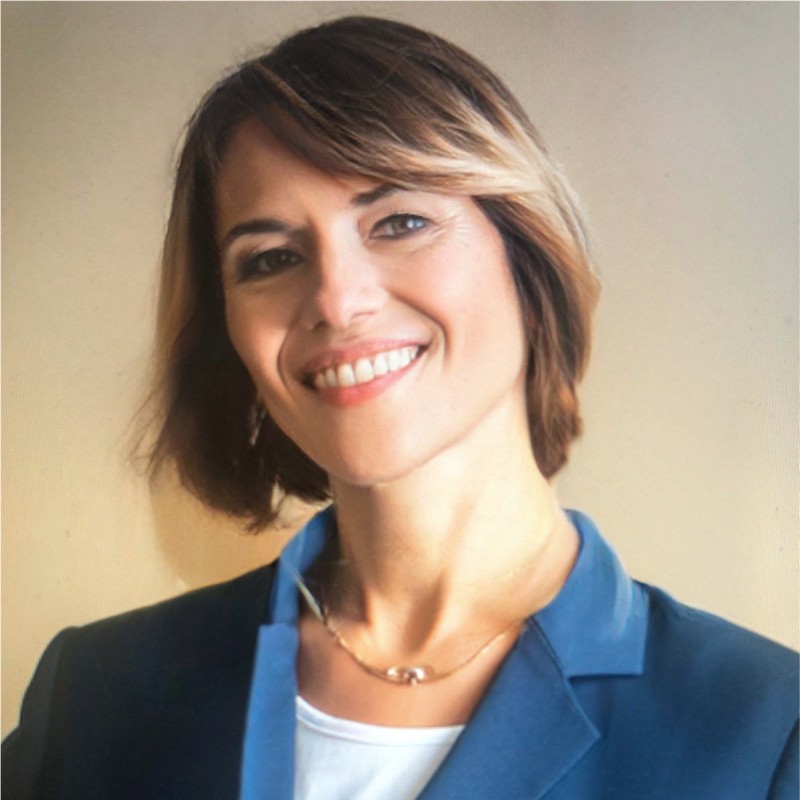

Prof. Sara Rubinelli, PhD
Professor of Health Sciences with a focus in Health Communication
Vice-rector Faculty for Health Sciences and Medicine
Prof. Gerold Stucki, MD
Professor of Health Sciences and Health Policy
Lead Strategic Council Swiss Learning Health System
Co-Director Center for Rehabilitation in Global Health Systems


