|
||
|
Dear researchers of the University of Lucerne, Welcome to the second edition of our Open Science Newsletter! This newsletter focuses on research data. Happy reading! Your Open Science Team Events and Courses


Open Science UnlockedOn 20 and 22 May, the Open Science Unlocked course series will take place again. The courses cover the fundamentals of Open Science (20 May, 10:15–12:00) as well as specific and practical aspects of Open Access (20 May, 13:15–17:00) and research data management (22 May, 9:15–12:30). The courses are offered in collaboration with the Centre for Learning, Teaching and Research (ZLLF) at Lucerne University of Applied Sciences and Arts. They are aimed at researchers from Lucerne University of Applied Sciences and Arts, the University of Lucerne, and the Lucerne University of Teacher Education. The courses will this semester be held in German. For more information and registration details, please visit the HSLU ZLLF website. 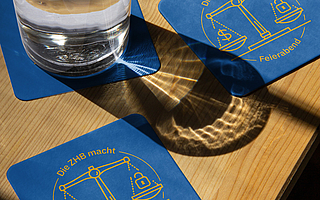
Die ZHB macht Feierabend: Zugang zu Wissen – ein Menschenrecht28 May 2026 – Loge (Moosstrasse 26, 6003 Luzern) The Central and University Library of Lucerne (ZHB) organizes after-work events at irregular intervals, during which ZHB staff engage in conversations with experts from a wide range of fields. At the second after-work event of the year, the ZHB turns its attention to the question of how a fair distribution of knowledge can be achieved. Starting from a legal perspective, two renowned experts will jointly shed light on the political challenges and opportunities of the right to science. Open science is not approached as a technical concept, but rather as a matter of human rights. How can more equitable global and societal participation in knowledge and scientific processes be achieved? What obstacles stand in the way of implementing the right to science? What solutions are needed at the political level? And who is actually responsible for implementing this human right? These and other questions will be discussed by Dominik Matter (Open Science Team, ZHB Lucerne) together with Monika Plozza (lawyer and senior research associate at the University of Bern) and Rahel Estermann (cantonal councillor and co-managing director of Digitale Gesellschaft). Further information is available on the ZHB website. Further Events28 April 2026 – wissen+ Forschungsdatenmanagement (online) 28 April 2026 – Choice of Law Dataverse in Action (University of Lucerne, Baloo 1.507, hybrid) 21 May 2026 – wissen+ Einfach Open Access publizieren – mit den Read&Publish Agreements (online) 29 May 2026 – Visual Data and Open Science: Friends or Foes? | SRDSN | SRDSN (online) In addition, here are two links to regularly updated event calendars:
News
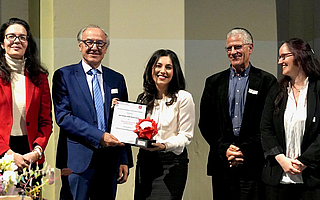
National ORD Prize for Lucerne Law Database Choice of Law Dataverse!The Swiss Academies of Arts and Sciences (a+) have awarded the project Choice of Law Dataverse (CoLD) of the Faculty of Law at the University of Lucerne with the National Prize for Open Research Data. The CoLD database curates and provides national legislation and court decisions in the field of private international law via a freely accessible digital platform. The database is maintained collaboratively, enabling students, researchers, and practitioners to navigate private international law more efficiently. With this project, Prof. Daniel Girsberger (project lead) and Agatha Brandão de Oliveira (research associate) promote transparent and openly accessible information in the legal sciences – warm congratulations to the award recipients! 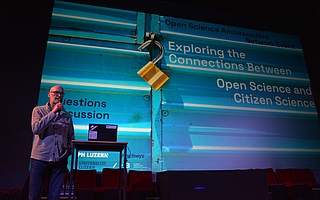
First Central Switzerland Open Science Ambassador Networking EventOn 12 March, the first networking event of the Central Switzerlands Open Science Ambassador Program took place at the Moderne Karussell. The focus was on the opportunities that arise when research is designed in a more open and participatory way. The thematic programme was launched by Tizian Zumthurm (Schweiz forscht / Science et Cité) with a keynote speach. He provided an overview of different forms and approaches to citizen science, presented current projects, and introduced useful tools – including a project guide for developing one’s own initiatives and the «Compass», a glossary of key terms from the scientific world. This was followed by short contributions from Katharina Roser (University of Lucerne, e-QuoL) and Sebastian Stuppan (Lucerne University of Teacher Education, GLOBE), who offered insights into their own research practice and demonstrated how participatory and open research can be implemented in concrete terms. To conclude, Prof. Stephen Wittkopf (HSLU – Engineering & Architecture) focused on the challenges and opportunities of citizen science in collaboration with industry partners. The subsequent discussion centred on questions such as how to distinguish between the roles of citizens as researchers and as research subjects, the global interest in participatory research, and, more broadly, the common ground shared by open science and citizen science. The Open Science Ambassador Program of the Central Switzerlands higher education institutions has been running since the beginning of the year. Its goal is to build a cross-institutional network of committed and trained researchers who advocate for awareness and implementation of Open Science. A key component is exchange, networking, and collaborative learning. The initiative is organized by ZHB Luzern in cooperation with the Central Switzerlands higher education institutions and is supported by swissuniversities. More information about the program is available on the University of Lucerne website – new ambassadors are always welcome! 
Open Science Award 2026 – Apply now!Applications for the Open Science Award 2026 are now open. You can apply yourself or nominate individuals or research teams until 31 July 2026. The application process has been simplified and takes only about 5 minutes through this form. More information is available on the University of Lucerne website. 
Love Data Week 2026Once again this year, the second week of February was dedicated to research data management. For the fifth time, Love Data Week took place in Switzerland. From 9 to 13 February, various Swiss higher education institutions offered lectures and workshops on the principles of research data management, while also addressing specific challenges – such as the use of artificial intelligence in research data management or the relationship between Open Science and knowledge security. The presentations are being made available on Zenodo on an ongoing basis. Save the date: The next Love Data Week will take place from 8 to 12 February 2027. Visibility of Open Access Books in swisscoveryOpen Access titles are generally integrated into the swisscovery catalogue via publishers’ metadata. If this is not the case for Open Access books by researchers at the university, the Open Science Team will supplement the corresponding records in the Research Information System (FIS) with the full text and approve them for LORY. Publications recorded in LORY are regularly transferred to swisscovery, ensuring optimal visibility. 
LORY Functionality: Issues ResolvedIn recent months, LORY – and the underlying platform Zenodo – experienced repeated performance problems, including temporary outages. One of the main causes was a significant increase in data traffic, particularly from AI bots and crawlers, which also led to difficulties with the interface to the research information system (FIS). Most of these issues have now been resolved, and the interface is functioning again. Negotiations with the publishers SAGE and Springer Nature: UpdateThere is currently no valid agreement in place with either publisher. However, negotiations with Springer Nature are ongoing and generally progressing positively. The goal remains to conclude a long-term, sustainable, and affordable contract with both publishers. Despite the interruption of the Open Access workflow, publication in hybrid journals from both publishers is still possible via the green route – that is, by uploading the accepted manuscript to the research information system FIS and by approving it for LORY. If you are planning to publish in a Gold Open Access journal from either publisher, please contact the Open Science team in advance (openaccess@zhbluzern.ch). Open Science Tip

No Data, No ResearchResponsible handling of research data is reflected not least in the choice of storage medium. We recommend:
Do you have specific requirements or questions regarding data storage? We are happy to help: forschungsdaten@zhbluzern.ch Open Science in Practice

Interview with Anne BeutterOpen Science Team: «What advice would you give to early-career researchers who want to integrate Open Science into their work?» Anne Beutter: «On a very practical level: think early on about how and where you can implement Open Access publications. And on a more fundamental level: be aware that, through your research, you are always drawing on resources from a given field, which you then transform into scholarly publications for your own academic advancement. Consider it part of your scientific integrity that the people who make these resources accessible to you also gain something from this encounter.» Dr Anne Beutter was co-lead of the project Religious Diversity in the Canton of Lucerne until the end of 2025 and served as a senior research associate at the Department of Religious Studies until the end of January 2026. She is currently working as a postdoctoral researcher at the University of Bremen. The long-term research project Religious Diversity in the Canton of Lucerne was awarded the Open Science Award by the University of Lucerne in 2025. In the interview, Anne Beutter explains why it is so important that research data be freely accessible. The full interview is available on the University of Lucerne website.
ZentralGut Gem
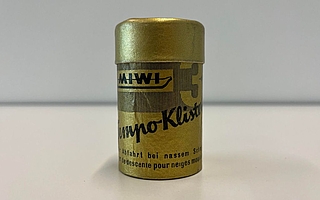
«MIWI 3 Tempo-Klister für Abfahrt bei nassem Schnee»ZentralGut is the digital showcase for the cultural heritage of Central Switzerland. Discover historical documents, photos, audio and film recordings from regional archives, museums and libraries. Among other collections, ZentralGut also publishes holdings related to Swiss sports heritage from the project Swiss Sports History, which is affiliated with the Department of History at the University of Lucerne. These materials are made available in cooperation with Central Swiss institutions, clubs, associations, and private individuals. Enjoy exploring!
Further Reading
|
||
|