|
||
|
Dear members of the academic mid-level staff, As 2026 draws to a close, it is a good opportunity to reflect on the past months and look ahead to upcoming developments. Throughout this semester, MOL has continued to address a range of issues affecting academic mid-level staff, with a particular focus on early-career researcher support, working conditions, and the further development of our representative body. Through discussions with the University Executive Board and participation in various university committees, we have brought forward the perspectives of mid-level academic staff and addressed current challenges. In this newsletter, we share updates on important developments, ongoing projects, and upcoming events. We also encourage you to share your ideas and concerns with us, as MOL depends on the exchange and active involvement of its members. Thank you for your continued interest and engagement. We wish you a wonderful end to the year and a great start to 2027! News from the MOL Board
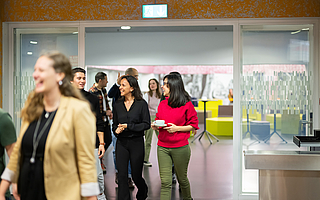

Join our Board!At the next General Assembly in May 2027, five board positions will be up for election: GMF, RF, WF and VPF and Treasurer (open to all faculties). The term starts on 1 August 2027. Interested? Feel free to get in touch! Exchange between MOL and the University Executive BoardOn 27 October 2026, the MOL Board met with the University Executive Board for their regular exchange. The discussion focused on current developments at the university and issues affecting academic mid-level staff. Topics included the implementation of the early-career researcher support strategy, increasing workloads due to rising student numbers, and ongoing efforts to optimize office space. Other matters discussed were institutional measures to prevent abuse of power and sexualized violence, the development of the new intranet, and updated flight booking procedures. The meeting provided an opportunity to bring the perspectives of mid-level academic staff into the discussion and address current challenges directly with university leadership. ONGONIG PROJECTS
MOL Internal Project: Strengthening Our RepresentationHow can we strengthen the representation of mid-level academic staff and make Board engagement more attractive in the long term? The MOL Board explored these questions in two workshops dedicated to its strategic development. The discussions focused on collaboration within the Board and the future direction of MOL. Three key areas emerged: strengthening connections across faculties, improving visibility and communication, and encouraging greater involvement in MOL. Possible ways to reduce the workload and provide incentives for Board members were also discussed. The insights gained provide a foundation for the continued development of MOL. Concrete measures will be explored further by the Board. Space and Workplace Optimisation Project: We Want to Hear from You!The university is implementing measures to optimize space and workplaces, such as new quiet and flexible workspaces and technically upgraded meeting rooms. If you have any feedback, experiences or concerns about these changes, please contact stella.brogna@unilu.ch so that we can bring them to the project group. A further exchange with the relevant project group is planned for January 2027. MOL continues to follow these developments and represent the perspectives of mid-level academic staff. Rising Student Numbers and Increasing WorkloadsRising student numbers are creating additional challenges for academic mid-level staff. In particular, the workload associated with supervising theses and grading examinations is increasing, while staffing levels are not necessarily growing at the same pace. The MOL Board raised these concerns during its meeting with the University Executive Board, highlighting the different situations and challenges across faculties. NEWS FROM OUR REPRESENTATIVES
AI CommissionThe university has decided to establish an AI Commission. The Commission’s remit is to develop a university-wide strategy for the use of AI in studies, teaching and administration. It draws up guidelines for the competence-based use of AI. Mid-level academic staff are represented on this committee by Thomas Zaugg and Clio Zubler, ensuring that our concerns are taken into account from the outset. Thomas Zaugg is a research assistant at the Faculty of Theology. His deputy, Clio Zubler, is a senior research assistant at the Faculty of Law. There are plans to set up a working group on this topic to take your views on board – more information on this is expected in January. NEWS FROM THE WORKGROUPS
Women in Academia invites you to lunch!Join us for lunch, good conversations, and a chance to connect with others! We’ll meet on 26 November at 12 noon at tibits, and lunch is on us! We’d love to see you there! Sign up here!
Women in Academia invites you to a fondue evening!Come along for a cozy evening of fondue, good conversations, and a chance to connect with others! Join us on 10 December at 5:30 pm in the KSF staff room (3.A60). We’ll take care of the fondue, bread, wine, and non-alcoholic drinks. Feel free to bring a salad or dessert to share! We’d love to see you there! Sign up here! Graduate Academy Holds Q&A Session on Implementing Its Postdoc Support StrategyThe Graduate Academy held an online Q&A session on 4 November 2026 to present the implementation proposals for its postdoc support strategy and to answer questions. The strategy aims to improve the employment and working conditions of postdocs. Outlook

Lunch at L’Osteria, 2 December 2026Join us for our next MOL Social Event! We’ll be getting together for lunch at L’Osteria (Bürgenstrasse 3, Lucerne) on Wednesday, 2 December, from 12:00 to 13:30. Swiss-Wide Open Science Survey: Open science is not just about PDFs, it’s about power!Dear colleague, Open Science practices shape who benefits from your labor, but do current Open Science policies benefit you? Open science is often presented as a technical matter (e.g., data repositories and licensing) or just another hurdle in the publishing process. For academic mid-level staff in the current academic system, it's increasingly something else: a shift in who sets the rules for how our work is evaluated, funded, and recognized. It often feels too late to completely adapt our approaches to new standards, yet we are not in a position to set those standards. Our voices as academic mid-level staff are crucial in determining how open science practices should be taught, used, and implemented. We, actionuni (umbrella organisation for academic mid-level staff in Switzerland), are running a national survey to understand how the implementation of open science policies are actually being felt by mid-level staff, whether you’ve been using open science practices or doing your best to avoid them. This anonymous survey takes about 15 minutes and is available in English, German, French, and Italian. Results will be shared publicly and used to push for better policies and training adapted to the needs of academic mid-level staff, across institutions. Take the survey here: https://actionuni.ch/swoss If you have any questions, please don't hesitate to reach out to survey@actionuni.ch. We thank you sincerely for contributing your voice to this important initiative! Please share this survey with your colleagues based in Switzerland. Warm regards, |
||
|